Cockroach infestations in Wellington divide strictly by species and habitat. In high-density residential developments such as Olympia, Versailles, and Sugar Pond Manor, German cockroaches dominate interior kitchen and…
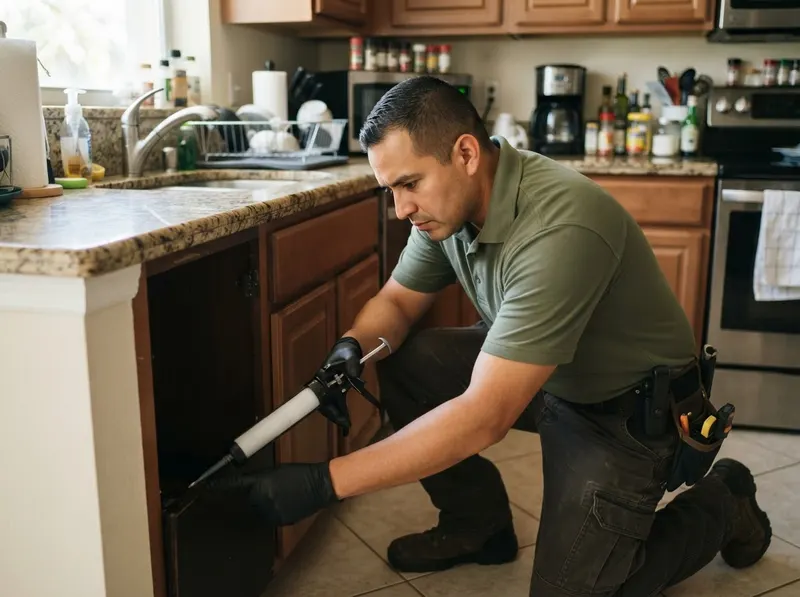
Cockroach infestations in Wellington divide strictly by species and habitat. In high-density residential developments such as Olympia, Versailles, and Sugar Pond Manor, German cockroaches dominate interior kitchen and bathroom cabinetry. A single female German cockroach carries an egg capsule (ootheca) containing 30 to 48 nymphs, producing exponential indoor population growth that over-the-counter pyrethroid sprays fail to halt due to widespread behavioral avoidance and chemical resistance. Treatment inside living spaces requires targeted micro-dot gel baits utilizing active ingredients such as indoxacarb or dinotefuran paired with non-repellent insect growth regulators (IGRs) like pyriproxyfen, which prevent immature nymphs from reaching reproductive maturity without dispersing them into adjacent bedrooms.
In contrast, larger acreage communities and equestrian properties along South Shore Boulevard, Grand Prix Village, and Palm Beach Point face continuous exterior pressure from American cockroaches, commonly called palmetto bugs. These three-inch perimeter pests breed inside damp mulch beds, oak canopies, water meter boxes, and horse barn wash racks before entering through weep holes, sliding door tracks, and unsealed plumbing penetrations. Exterior management requires applying a granular bait barrier combined with a micro-encapsulated liquid application spanning 10 feet out from foundation walls and 3 feet up the exterior perimeter. This approach halts nocturnal foraging without requiring heavy indoor pesticide exposure, keeping family pets, dogs, and horses protected from toxic residue.
Properties bordering canal banks and nature preserves in Binks Forest, Greenview Shores, and Meadow Wood require moisture management alongside chemical controls. Subtropical summer humidity levels exceeding 80% accelerate cockroach metabolic rates, turning small perimeter entry points into active entry funnels. The service protocol follows three clear steps: 1. Complete mechanical inspection of kitchen appliances, under-sink void areas, and exterior stucco junctions to identify nesting harborages. 2. Application of targeted, low-volatility gel baits and dusts behind switch plates and motor compartments where insects feed. 3. Placement of pest monitoring boards to record population decline rates over a 14-day evaluation window.
Choosing targeted baits over traditional indoor baseboard spraying provides decisive control while preventing airborne pesticide drift across countertops and food-preparation surfaces. The trade-off of professional micro-baiting is that dead roaches surface over a 3- to 7-day period as the growth regulators and metabolic disruptors cycle through the colony, rather than creating an instant knockdown of visible insects. For localized indoor infestations, targeted placement addresses nests directly without requiring residents to vacate the premises for hours, whereas severe multi-room nesting may necessitate an initial vacuum extraction of aggregations followed by a mandatory 21-day follow-up inspection to eliminate newly emerged instars.
Every job gets a firm, written price after a free on-site visit.
Tell us about your cockroach control job in Wellington and we'll send a clear, written quote, usually the same day.
 Wild Basin Pest Control