Professional pest control service in Wellington stops invasive insect colonies and destructive rodent populations before they damage structural framing or compromise household safety. Properties adjacent to regional drainage canals, equestrian rings, and subtropical wetland buffers encounter severe pest migrations throughout the year.
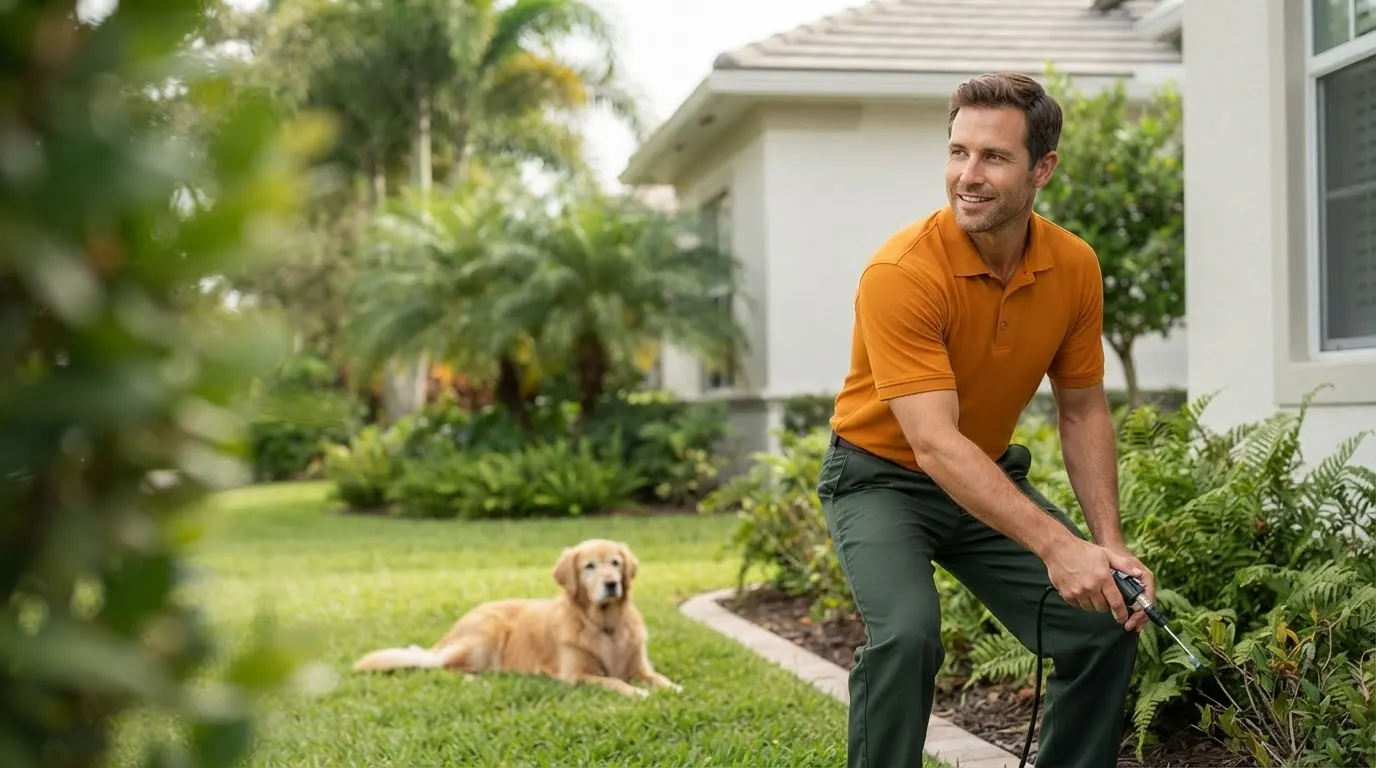
Pest Control Service company in Wellington is a structural extermination and perimeter barrier defense provider that eliminates wood-destroying insects, domestic rodents, and subtropical pests from residential properties across Palm Beach County.
Every service reflects the same meticulous attention to detail, whether it's a single job or a larger pest control service project across Wellington.
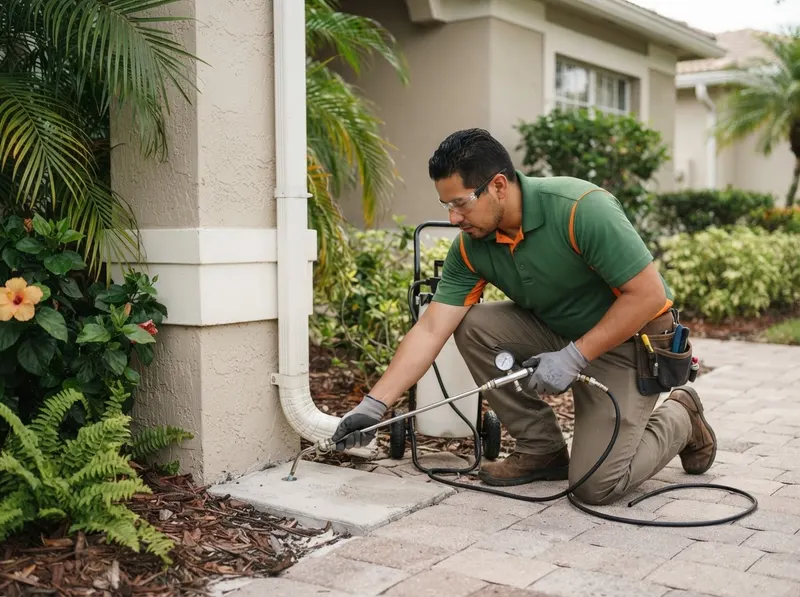
Subterranean and drywood termites cause catastrophic wood damage across South Florida properties. Comprehensive termite control uses non-repellent termiticide perimeter trenching around concrete slabs, sub-slab foundation injections, and localized attic borate treatments. Technicians inspect expansion joints, plumbing penetrations, and fascia boards to neutralize active colonies. Liquid termiticide soil barriers create a contiguous treated zone that subterranean worker termites cross unknowingly, transferring the active non-repellent compound throughout the central nest. Drywood termite remediation isolates localized structural infestations inside truss systems, rafters, and interior door headers using precision micro-injections of foaming termiticides that penetrate directly into gallery cavities without requiring invasive whole-structure fumigation whenever colonization remains localized.
Get a quote →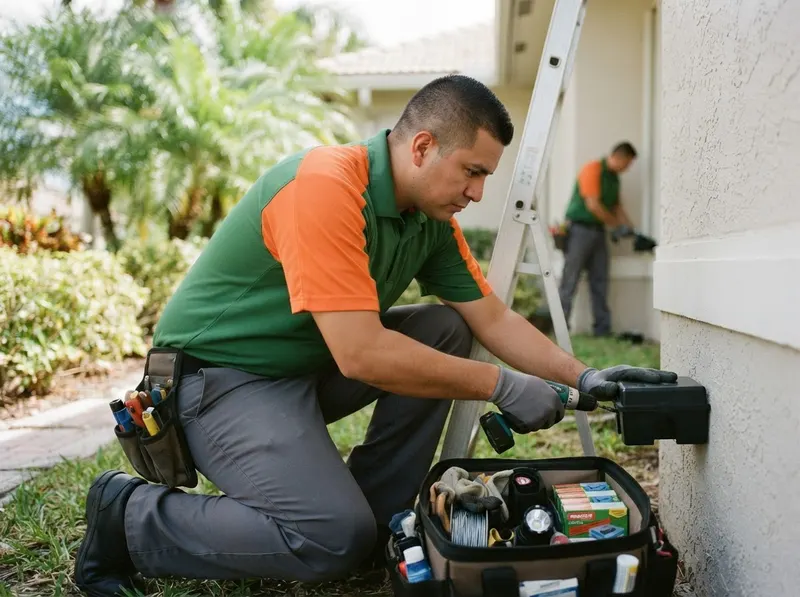
Roof rats and house mice enter residential attics and equestrian tack rooms through roof tile transitions, soffit junctions, and plumbing stacks. Rodent control deploys physical mechanical traps inside secured transit zones alongside copper mesh and structural metal flashing exclusions across exterior perimeters. This systematic removal stops insulation contamination and electrical wire gnawing. Technicians trace attic runways, droppings, and urine stains using ultraviolet diagnostic lighting to map primary feeding pathways. Every access portal measuring one-quarter inch or larger receives 18-gauge galvanized steel mesh fastening or weather-resistant elastomeric sealant. Trapping protocols clear out existing rodents inside the building within 5 to 10 days, preventing recurring nesting and eliminating hazardous airborne pathogen accumulations.
Get a quote →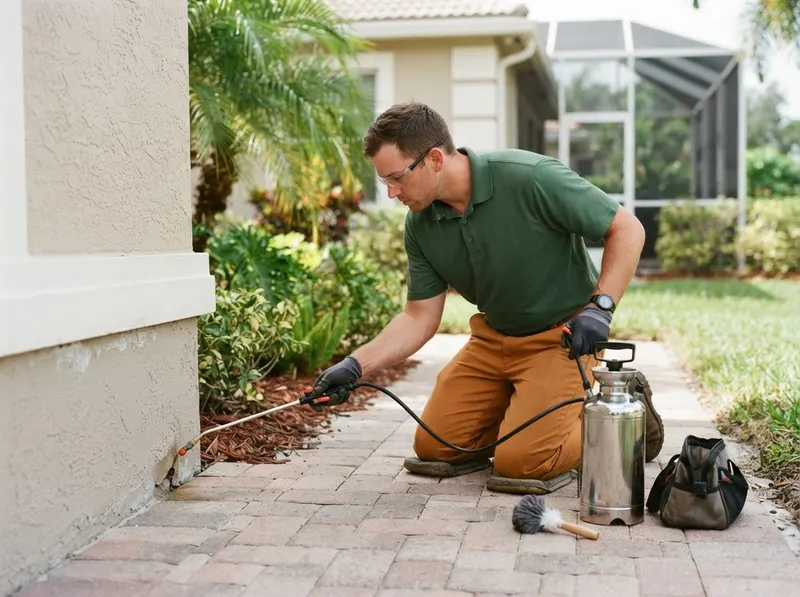
Invasive Ghost Ants, White-Footed Ants, Big-Headed Ants, and Carpenter Ants construct extensive satellite nesting systems throughout South Florida wall voids, mulch beds, and paver bases. Professional ant control avoids repellent over-the-counter pyrethroid sprays that trigger colony budding and rapid indoor dispersion. Extermination protocols deploy slow-acting liquid and gel baits carrying insect growth regulators and metabolic inhibitors that foraging ants transport directly to subterranean queens. Technicians treat exterior foundation perimeters with broad-spectrum non-repellent chemical applications spanning 3 feet up the vertical wall and 10 feet outward across adjoining landscape beds, severing primary trail pathways leading into kitchens, bathrooms, and window weep screeds.
Get a quote →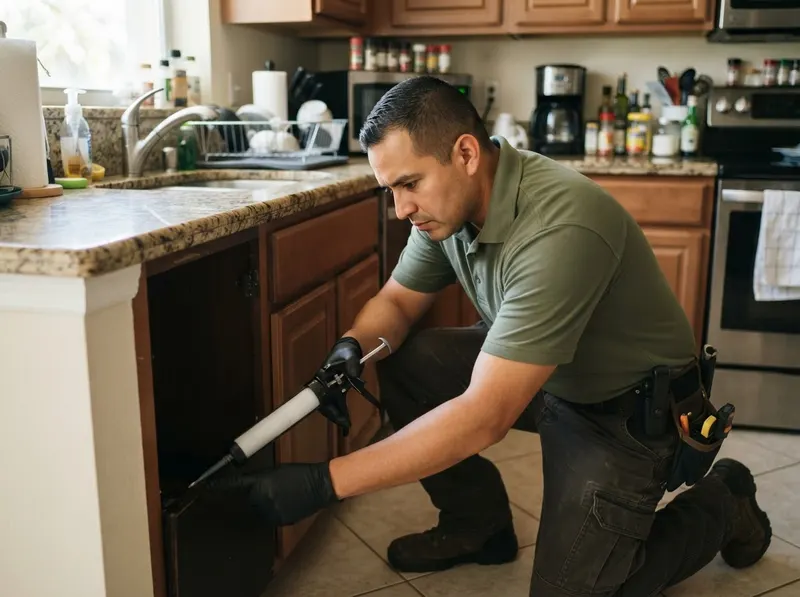
German cockroaches inside residential kitchens and American cockroaches emerging from exterior palm trees and sewage cleanouts require distinct eradication methodologies. Cockroach control eliminates German cockroach infestations through comprehensive crack-and-crevice treatments utilizing non-volatile gel baits, synthetic insect growth regulators, and precision vacuuming of harborage pockets behind appliances and electrical faceplates. Outdoor American cockroaches (palmetto bugs) that traverse roof overhangs, plumbing vents, and sliding glass door tracks are addressed with exterior perimeter granule barriers, perimeter soil drenching, and attic dustings using desiccant silica formulations that dehydrate crawling insects upon direct physical contact.
Get a quote →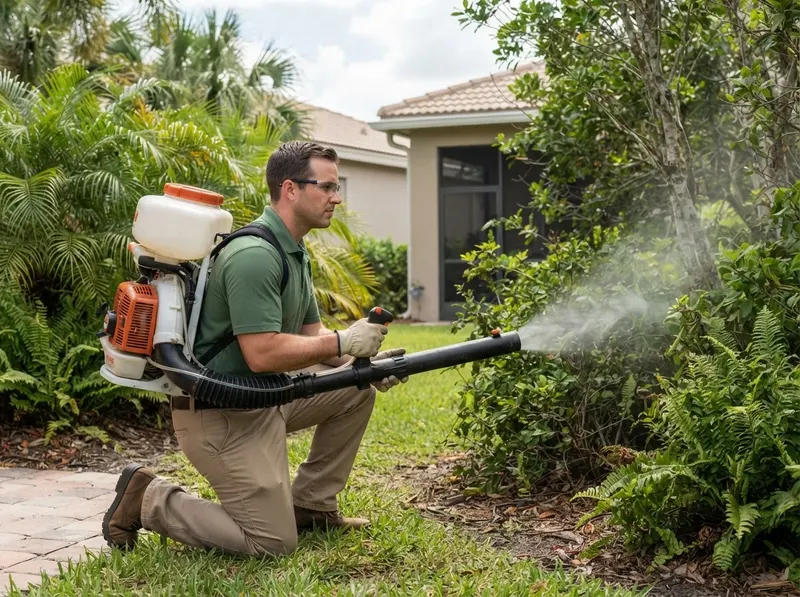
High water tables, residential canal networks, and equestrian drainage ditches across Wellington foster rapid breeding of Aedes and Culex mosquito species. Professional mosquito suppression programs integrate biological larvicide applications inside standing water retention zones with fine-droplet motorized mist barrier treatments along ornamental foliage perimeters, dense shrub lines, and shaded barn breezeways. Formulations utilize microencapsulated adulticides paired with insect growth regulators that bond to the underside of leaves where adult mosquitoes shelter during high daytime heat, reducing biting insect counts by 85% to 90% across 21 to 30-day treatment intervals without disturbing beneficial garden pollinators.
Get a quote →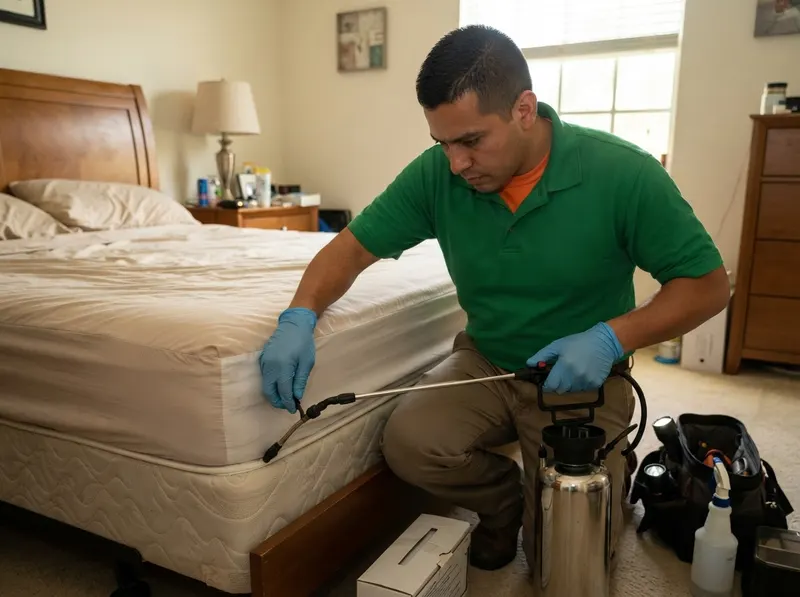
Bed bug eradication requires rigorous structural treatments that neutralize all life stages, including microscopic eggs hidden inside mattress tufts, baseboards, headboards, and electrical switches. Extermination strategies combine targeted contact adulticide applications, residual insect growth regulator sprays, and specialized steam penetrations exceeding 180 degrees Fahrenheit across textile surfaces and bed frames. Technicians apply amorphous silica dust into wall voids and hollow furniture legs to provide continuous mechanical kill barriers that persist for months, ensuring newly hatched nymphs succumb before they establish a secondary reproductive cycle.
Get a quote →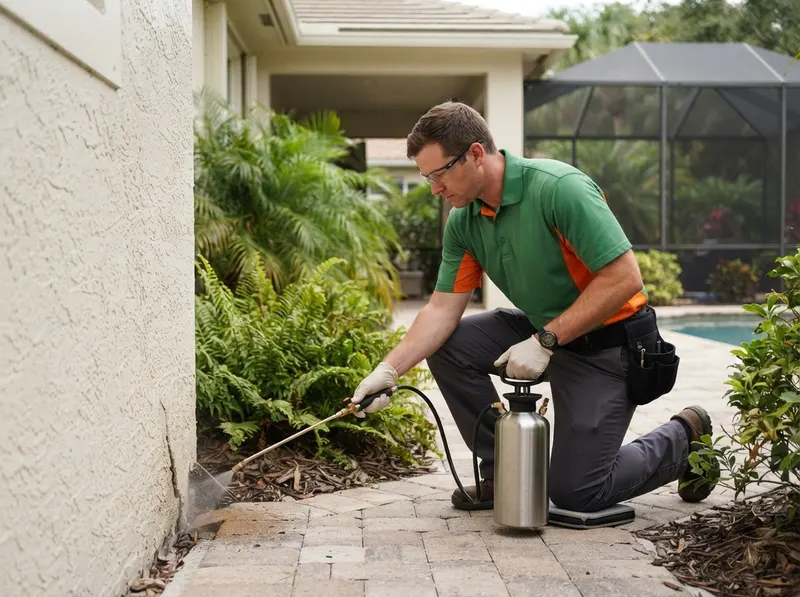
Subtropical black widows, brown recluses, yellow sac spiders, and bark scorpions shelter inside garage utility areas, decorative landscape rock, outdoor kitchen cabinetry, and pool screen enclosures. Targeted spider and scorpion treatments combine physical de-webbing using extension poles treated with repellent micro-dusts alongside non-staining microencapsulated exterior perimeter sprays. Direct liquid applications to window casings, eaves, patio headers, and weep screeds eliminate the flying and crawling insect prey baseline, systematically starving predatory arachnids and forcing them away from human living spaces and covered outdoor patios.
Get a quote →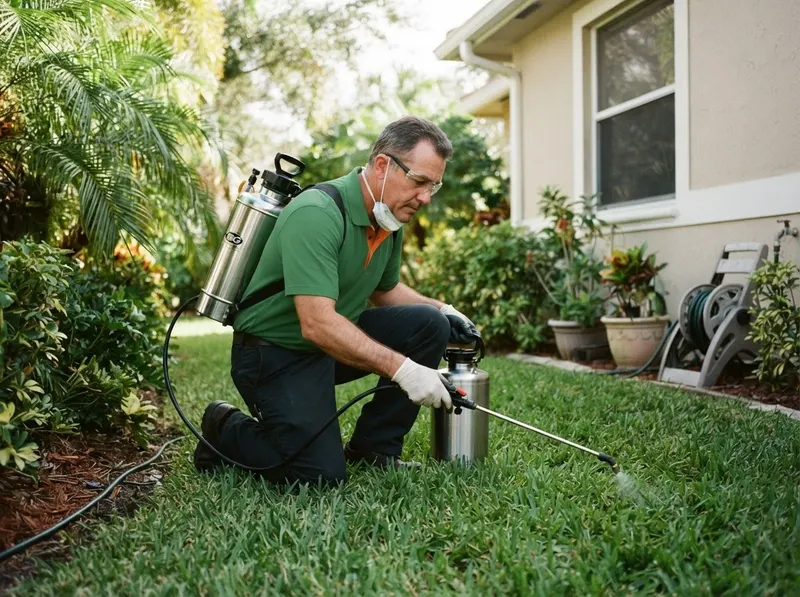
Sandy South Florida soil profiles and year-round warm temperatures sustain severe cat flea and brown dog tick populations that infest turfgrass, barn run-in sheds, and domestic carpets. Flea and tick eradication applies dual-action outdoor insecticidal drenches combined with indoor residual growth regulators that stop flea pupae and tick nymphs from maturing into reproductive adults. Exterior treatments target shaded turf zones, pine straw bedding, and fence perimeters frequented by domestic animals and local wildlife, breaking the external transmission vector and protecting household pets from persistent blood-feeding cycles.
Get a quote →You get a firm, itemized quote for your pest control service before any work begins, no surprises, no pressure.
Careful prep, tidy work, and a full cleanup when we are done. We treat your home and belongings like our own.
The same trusted, background-checked team from the first call to the final check.
If structural framing exhibits drywood frass or subterranean mud tubes, select targeted termite control with non-repellent liquid soil treatments or borate wood applications. If broad ant trails emerge along kitchen counters or plumbing chases, choose non-repellent baiting and perimeter barrier sprays rather than repellent broadcast chemicals. The operational trade-off centers on treatment persistence versus targeted chemistry: non-repellent formulations allow foraging workers to transfer active ingredients back into the deep subterranean colony over 7 to 14 days, whereas cheap pyrethroid knockdowns repel insects temporarily without destroying the underlying queen.
When rodent gnawing or attic scratching sounds occur overhead between November and February, opt for physical mechanical exclusion and one-way directional exits rather than loose bait blocks; the trade-off requires sealing architectural entry gaps alongside rooflines and soffit junctions to stop re-infestation, whereas chemical poisons inside attics risk dead-rodent decomposition inside inaccessible drywall cavities. For equestrian properties along South Shore Boulevard, choose automated perimeter misting and targeted larvicide drenches across drainage swales to reduce stable flies and biting midges, while accepting that open-air turnout paddocks require ongoing scheduled maintenance due to continuous organic manure generation and standing ditch irrigation.
Every project gets a firm, written price after a free on-site visit. Ranges below for orientation.
Tell us about your pest control service job and we'll send a clear, written quote, usually the same day. Or just call and talk to a real Wellington pro.
(728) 247-0849
Wellington's distinct geography blends high-density suburban subdivisions with expansive 5-to-10-acre equestrian estates bordering the Florida Everglades conservation basin. Subdivisions such as Olympia, Versailles, and Sugar Pond Manor experience chronic ghost ant and roach migrations emerging from interconnected stormwater canal banks and decorative lake littoral zones. Concurrently, equestrian communities in Grand Prix Village, Palm Beach Point, and the Wellington Aero Club confront distinct biological pressures: horse feed, bedding shavings, and manure storage concentrate high populations of stable flies, roof rats, and German yellowjackets. The sandy, porous soil structure characteristic of western Palm Beach County accelerates subterranean termite movement, particularly when irrigation runoff from polo fields and equestrian dressage rings keeps subterranean substrate constantly damp. Professional pest control protocols in Wellington must balance aggressive structural chemical barriers along building slab perimeters with eco-conscious, targeted chemistries around equestrian facilities and sensitive freshwater drainage canals running alongside Forest Hill Boulevard, South Shore Boulevard, and Pierson Road.
Free estimates for Wellington & the surrounding area.
 Wild Basin Pest Control