Residential bed bug infestations in Wellington develop rapidly due to high-volume seasonal travel surrounding Wellington International and the National Polo Center. Adult bed bugs measure 4 to 5 millimeters in length,…
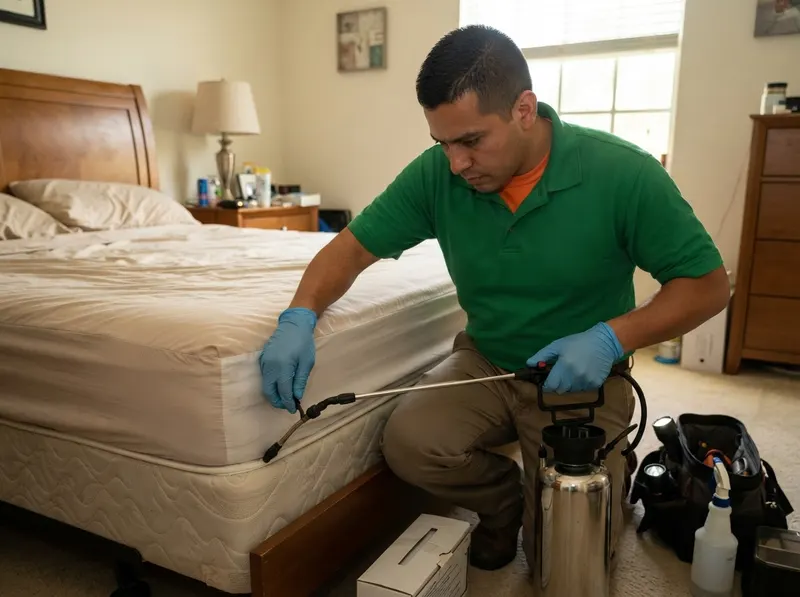
Residential bed bug infestations in Wellington develop rapidly due to high-volume seasonal travel surrounding Wellington International and the National Polo Center. Adult bed bugs measure 4 to 5 millimeters in length, hiding inside screw holes, baseboard seams, and mattress tufts during daylight hours. Over-the-counter pyrethroid foggers frequently fail because local populations carry metabolic resistance, which drives pests deeper behind drywall and into adjacent rooms. Professional remediation relies on elevating ambient room temperatures to a sustained 120°F to 135°F or applying targeted non-repellent liquid actives alongside desiccant dusts such as amorphous silica gel, which dehydrates the insect cuticles without dispersing airborne chemical odors throughout domestic living quarters.
Treatment selection balances structural containment against property layout. Thermal whole-structure remediation suits detached residences in Binks Forest, Versailles, or Meadow Wood, where high heat penetrates thick upholstery and interior wall voids in a single 8-hour window without requiring family belongings to be discarded. The operational trade-off of whole-home heat is rigorous pre-treatment prep: heat-sensitive items including wax candles, aerosol cans, fine equestrian leather gear, and vinyl window blinds must be removed beforehand. For estate guest quarters in Grand Prix Village or Palm Beach Point, localized precision treatments using dual-action growth regulators and localized steam provide effective control when specific suites experience localized guest-turnover introductions.
Re-entry protocols maintain strict safety standards for domestic pets, horses, and children. In communities such as Olympia, Sugar Pond Manor, Greenview Shores, and the Wellington Aero Club, treated rooms require a mandatory 4-hour settling window following liquid or aerosol spot applications to ensure active carriers have dried completely. Service begins with an objective visual inspection: 1. Confirm live biological evidence, fecal spotting, and cast skins under magnification; 2. Encase affected mattresses in laboratory-tested zippered barriers; 3. Execute the calibrated application; 4. Re-inspect at the 14-day mark to verify total interruption of the egg hatch cycle.
Every job gets a firm, written price after a free on-site visit.
Tell us about your bed bug extermination job in Wellington and we'll send a clear, written quote, usually the same day.
 Wild Basin Pest Control